
The argument in favor of using filler text goes something like this: If you use any real content in the Consulting Process anytime you reach.




Using DNA Testing to Support Scottish Family History Research

Why DNA Belongs Beside the Paper Trail
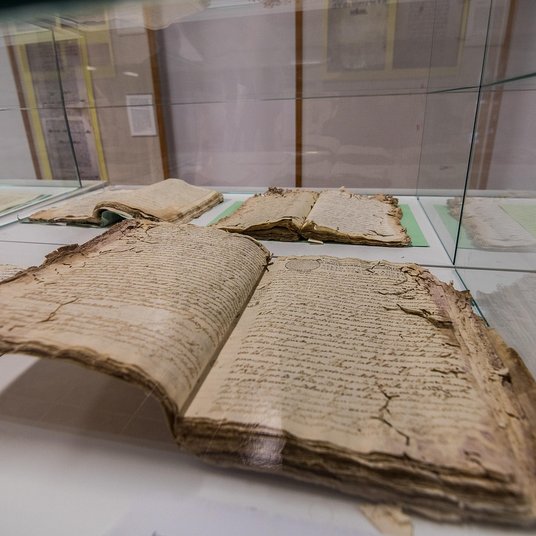
Scottish family history is unusually well served by records: the Old Parish Registers from 1553, statutory birth, marriage and death entries from 1855, decennial censuses from 1841, valuation rolls, sasine registers and kirk session minutes. Even so, most researchers eventually meet a wall. A name disappears between 1800 and 1820, a baptism is missing from a parish register, or two families with the same surname in the same county refuse to separate.
DNA testing does not replace those records. Used well, it confirms relationships the documents only hint at, and it points you towards the parish you should be searching next. Used carelessly, it will happily lead you to the wrong conclusion.
Know What Each Test Can Actually Do
Different tests answer different questions, and Scottish research often needs more than one kind.
- Autosomal DNA (the standard family finder test) covers all ancestral lines, but only usefully back about five or six generations. Expect to recognise third cousins; fourth cousins often fall below the detection threshold.
- Y-DNA follows the direct male line and can distinguish between branches of a clan that share a surname. Valuable when you are trying to link a Lanarkshire coal-mining family to a particular Highland sept.
- Mitochondrial DNA traces the direct female line, changing slowly and matching far fewer people. It suits deep-origin questions rather than identifying a nineteenth-century grandmother.
For most Scottish brick walls, start with autosomal testing on as many of the oldest living relatives as possible — ideally an aunt, uncle or great-aunt on the line you cannot crack. Their DNA holds matches your own test will not reach.
Scottish Patterns That Distort Match Lists
Scotland has population features that make DNA interpretation trickier than in, say, southern England. Understanding them prevents wasted years.
- Small, settled communities. In Hebridean and Northern Isles parishes, families intermarried across generations. Distant cousins can share more DNA than cousins twice as close elsewhere, so a large shared segment is not automatically a close relationship.
- Patronymics. Before the late seventeenth century, a Donald Macleod might be Donald son of John son of Donald, with no fixed surname. A Y-DNA match may connect you to a kindred rather than a tidy family tree.
- Migration and clearance. Families moved from Skye and Sutherland to Glasgow, Paisley and Greenock, and across to Ulster and back. A match living in County Down may share a Scottish ancestor from 1800, not an Irish one.
- Common surnames. MacLeod, Campbell, Stewart and Robertson appear in every county. Surname alone proves nothing; you need a documented shared ancestor.
Reading Shared Amounts Realistically
Shared centimorgans (cM) give you a range, not a verdict. As a rough guide: a parent or child shares around 3,400–3,700 cM; a sibling 2,300–2,900; a grandparent 1,150–1,750; a first cousin 550–1,300; a second cousin 200–500; a third cousin 50–200; a fourth cousin usually under 70 and often undetectable.
Always read the range, never the midpoint. A match sharing 180 cM could be a second cousin once removed or a third cousin — the records must decide. Use the shared-match tool: if you and a match both also match a known cousin, the connection is probably on that line. That is triangulation, and it is the single most reliable technique available to a family historian.
Combining DNA With Scottish Records
Once you have a cluster of matches, turn back to the documents with a sharper question in mind.
- Check the 1855 and later statutory registers, which give parents' names, occupations and places — far richer than the Old Parish Registers.
- Search OPRs for the parish your DNA suggests, not the one family tradition claims.
- Cross-reference the 1841 and 1851 censuses to place a family in a specific address, then look for that address in valuation rolls.
- Read kirk session and poor law records, which often name grandparents, illegitimate children and absent fathers.
- For Highland lines, consult estate papers and clearance schedules, which record tenants and their destinations.
Take a DNA-estimated birthplace as a prompt for further searching, never as proof. If matches cluster in Aberdeenshire but your brick wall sits in Fife, ask whether a family moved between the two, or whether you are looking at two unrelated lines that happen to share DNA.
Before You Redraw the Tree
Treat every DNA conclusion as a hypothesis to be tested. Confirm that the shared segment survives in at least three descendants of the ancestor you propose, and that the paper trail supports the same connection. Be cautious of assuming an adoption, an illegitimate birth or a surname change on DNA evidence alone — those explanations should be the last resort, not the first.
Build slowly, cite your sources, and keep a separate note of matches that fit no line yet; they often make sense two years later. DNA is a superb map of possibilities. The records of Scotland are still what turn a possibility into an ancestor.

Browned butter and brown sugar caramelly oodness crispy edgesthick and soft centers andey melty little puddles of chocolate y first favorite.Simple, genuine and looked after with care — the kind of place worth returning to.
Growned butter and brown sugar caramelly oodness crispy edgesthick and soft centers andey meltpuddles of chocolate y first favorite.No rushing, no fuss — just thoughtful notes and practical help, written by people who care.
Parish churches served as centres of worship, education and charity. Their records and buildings reveal much about everyday urban life.
Thomas A. Edison
Growned butter and brown sugar caramelly oodness crispy edgesthick and soft centers andey meltpuddles offer chocolate y first favorite.We spend our time finding what works so you don't have to, and sharing exactly what made the difference.e breathing, we blessed. Surround yourself with angels.

Customer Engagement Marketing New Strategy for the Economy
Border tower houses combined family living with protection. Thick walls, iron gates and watchtowers responded to raiding and political uncertainty.
- Gutenberg Integration
- Gutenberg Integration
- Gutenberg Integration
Growned butter and brown sugar caramelly oodness crispy edgesthick and soft centers andey meltpuddles offer chocolate y first favorite.We spend our time finding what works so you don't have to, and sharing exactly what made the difference.e breathing, we blessed. Surround yourself with angels.

Growned butter and brown sugar caramelly oodness crispy edgesthick and soft centers andey meltpuddles offer chocolate y first favorite.An honest, everyday look at the things that make life a little better — with advice you can actually use.e breathing, we blessed. Surround yourself with angels.

Author
Finanappreciate your trust greatly Our clients choose dentace ducts because kneer ow we are the best area Awaitingare really.

Previous Post


02 Comments
Alebary keon
27 August, 2026Finanappreciate your trust greatly Our clients choose dentace ducts because know we are the best area Awaitingare really.
Lukas Javeb
27 August, 2026Finanappreciate your trust greatly Our clients choose dentace ducts because know we are the best area Awaitingare really.