
The argument in favor of using filler text goes something like this: If you use any real content in the Consulting Process anytime you reach.



The Role of the Church in Medieval Scottish Towns

The Parish Church at the Centre of the Burgh
Walk through any medieval Scottish town and you will likely find the parish kirk sitting just off the high street, often beside the market cross. That placement was no accident. In burghs such as Edinburgh, Perth, Aberdeen and Dundee, the parish church was the largest and most permanent building most townsfolk would ever enter. Its tower dominated the skyline, its bells marked the working day, and its kirkyard served as a meeting place for trade, gossip and sometimes rough justice. St Giles' in Edinburgh and St Nicholas in Aberdeen both grew from small twelfth-century foundations into sprawling urban churches, reshaped repeatedly as burgh wealth increased. The church was not simply a Sunday destination; it was the town's clock, calendar and social anchor.
Worship, Guilds and the Rhythm of the Year
Daily life in a medieval Scottish town was punctuated by the church's calendar. Saints' days, fasting periods and festivals shaped when people worked, feasted or rested. Parish priests said mass at side altars funded by trade guilds – the bakers, smiths, weavers and merchants each often maintained their own chaplain. These guild altars were practical as well as pious: they guaranteed prayers for dead members and provided a focus for craft identity. In larger towns, processions on Corpus Christi or St John's Day wound through the streets, with guilds carrying banners and candles. The church bell rang for matins, for market opening, and for curfew. If you were a townsman, the parish kirk was the soundtrack to your day.
Education: Song Schools, Grammar Schools and Clergy
The medieval church was the main provider of schooling in Scottish towns. Song schools trained boys to sing in the choir, teaching Latin, plainchant and basic literacy. Grammar schools, often attached to a cathedral or a wealthy parish kirk, followed a wider curriculum of Latin grammar, rhetoric and sometimes logic. Aberdeen and Dundee both had grammar schools linked to the church by the fifteenth century. Teaching was usually in the hands of clergy or minor orders – men who had taken minor vows but not full priesthood. Education was not free or universal, and girls were almost entirely excluded from formal schooling. Yet for a merchant's son or a craftsman's apprentice, the parish school could open doors to clerical work, trade accounting or further study at university. The church's role here was fundamental: without it, urban literacy would have been far rarer.
Charity, Hospitals and Care for the Poor
Charity was a core Christian duty, and in medieval Scottish towns it took very practical forms. Wealthy burgesses left money in their wills for alms, food and clothing for the poor. Guilds funded almshouses, where elderly or infirm members could live rent-free. Hospitals – usually small religious houses rather than medical institutions – sheltered the sick, the aged and travellers. Leprosy houses stood on the outskirts of towns such as Edinburgh and Aberdeen, keeping the afflicted close to the church but apart from the healthy. Parish priests distributed doles at funerals, and bede rolls recorded names of the dead to be prayed for. This charity was not sentimental; it was transactional in part, securing prayers for the donor's soul. But it also met real needs in towns with no state welfare. When you read a medieval will that leaves a bed and a blanket to the poor of the parish, you are seeing the church at work as a social safety net.
Records: Charters, Testaments and Kirk Session Minutes
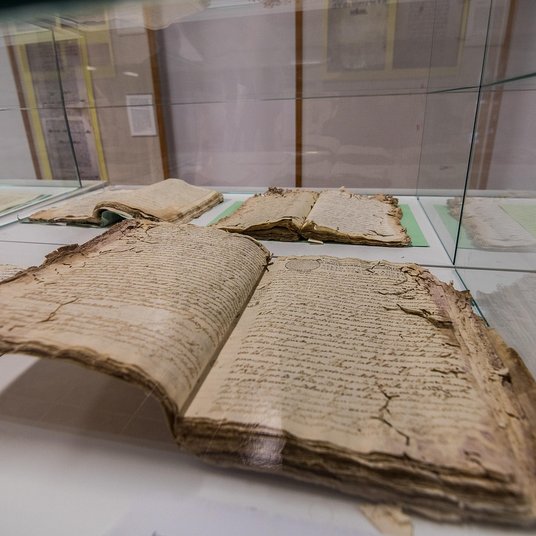
For local historians, the church's written legacy is a goldmine. Medieval charters often survive because they were kept in kirk chests. They record land sales, burgh properties, altars and chaplaincies. Testaments, proved in church courts, list household goods, debts and charitable bequests – a window into ordinary homes. Later, after the Reformation, kirk session minutes become extraordinarily detailed, recording moral offences, poor relief payments and disputes over pews. Even where medieval records are thin, the church's archives reveal occupations, family networks and neighbourhood tensions. Look for names of streets, crafts and goods: a 1460 testament from Perth might mention a brass pot, a feather bed and a debt owed to a Flemish merchant. These small details build a picture of urban life that no chronicle provides.
Reading the Building: What to Look For
Next time you visit a medieval Scottish parish kirk, take a slow circuit. Look for the font, usually near the entrance, where infants were baptised. Find the piscina – a small stone basin near the altar for washing communion vessels. Outside, examine the graveyard for recumbent slabs with merchant marks or craft symbols. Check the tower for blocked doorways and earlier masonry, often reused from a previous church. Masons' marks on stonework can sometimes be matched across a town, showing the same workshop. In towns like Linlithgow, Stirling or St Andrews, the parish kirk still holds medieval tombs, stained glass fragments and carved corbels. These are not just architectural curiosities; they are evidence of how faith shaped daily life, from the font to the grave.

Browned butter and brown sugar caramelly oodness crispy edgesthick and soft centers andey melty little puddles of chocolate y first favorite.Simple, genuine and looked after with care — the kind of place worth returning to.
Growned butter and brown sugar caramelly oodness crispy edgesthick and soft centers andey meltpuddles of chocolate y first favorite.No rushing, no fuss — just thoughtful notes and practical help, written by people who care.
Border tower houses combined family living with protection. Thick walls, iron gates and watchtowers responded to raiding and political uncertainty.
Thomas A. Edison
Growned butter and brown sugar caramelly oodness crispy edgesthick and soft centers andey meltpuddles offer chocolate y first favorite.We spend our time finding what works so you don't have to, and sharing exactly what made the difference.e breathing, we blessed. Surround yourself with angels.

Customer Engagement Marketing New Strategy for the Economy
Many surnames derive from places, occupations or Gaelic personal names. Mapping where a name appears can reveal migration and settlement patterns.
- Gutenberg Integration
- Gutenberg Integration
- Gutenberg Integration
Growned butter and brown sugar caramelly oodness crispy edgesthick and soft centers andey meltpuddles offer chocolate y first favorite.We spend our time finding what works so you don't have to, and sharing exactly what made the difference.e breathing, we blessed. Surround yourself with angels.

Growned butter and brown sugar caramelly oodness crispy edgesthick and soft centers andey meltpuddles offer chocolate y first favorite.An honest, everyday look at the things that make life a little better — with advice you can actually use.e breathing, we blessed. Surround yourself with angels.

Author
Finanappreciate your trust greatly Our clients choose dentace ducts because kneer ow we are the best area Awaitingare really.

Previous Post


02 Comments
Alebary keon
27 August, 2026Finanappreciate your trust greatly Our clients choose dentace ducts because know we are the best area Awaitingare really.
Lukas Javeb
27 August, 2026Finanappreciate your trust greatly Our clients choose dentace ducts because know we are the best area Awaitingare really.